
#c0392b
#1b2b6b
#d4a847
#e8824a
#7a6652
#f2e0b0
Source — Moldovan folk weaving tradition
Logic — Industrial meets decorative
Fire as myth + daily reality
#000000
#dc143c
#556b2f
#ffd700
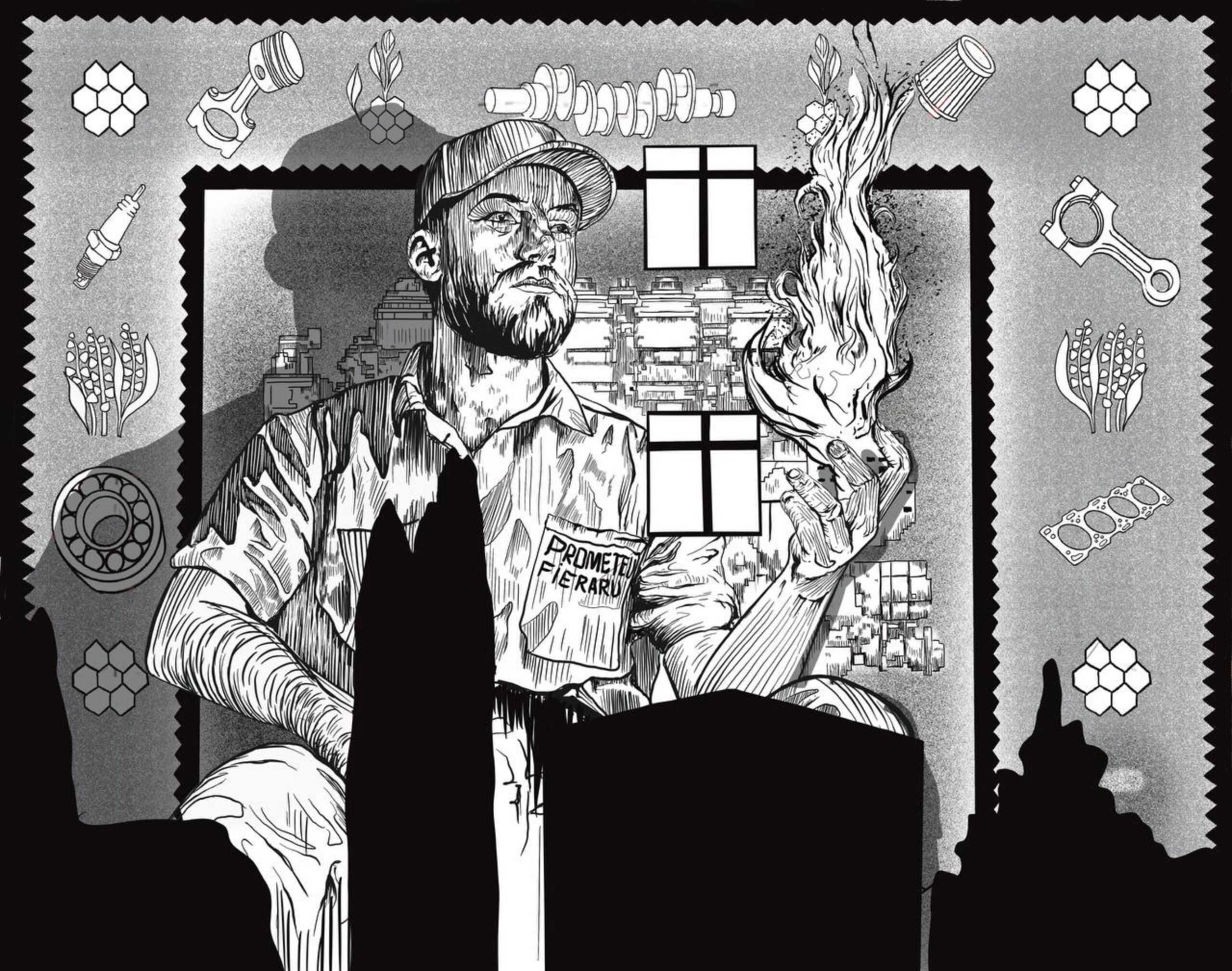
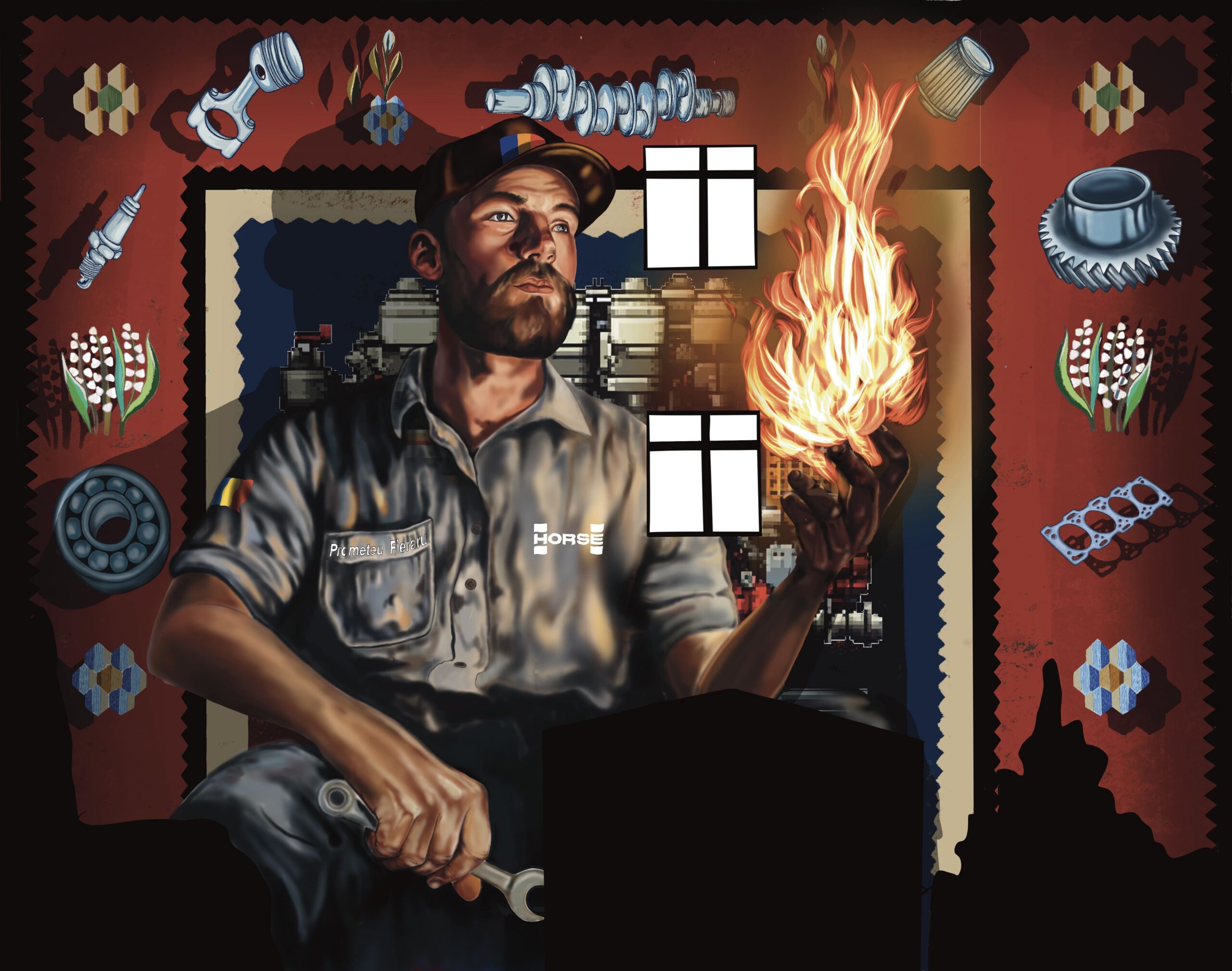
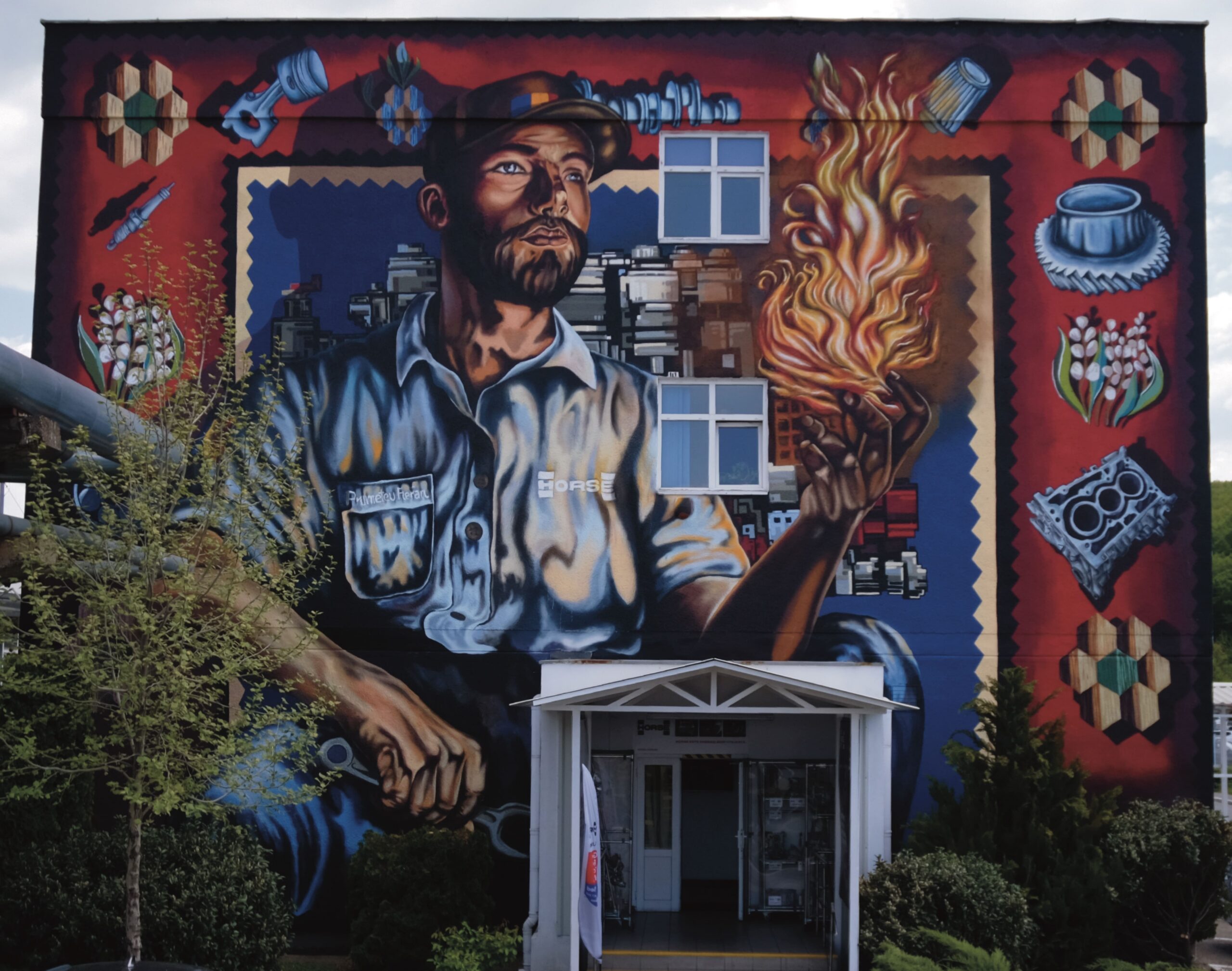
Commission for Horse Engine Factory, a Dacia/Renault facility in Pitești, Romania. Prometeu Fieraru — the Prometheus of the forge — depicts a worker who holds fire not as mythology but as industrial daily reality.
The composition frames the subject as a postage stamp: worker as monument, factory as country. Engine parts form the decorative border — pistons, gears, bearings — connecting Romanian tradition with industrial production. Real factory windows become negative space, architecture integrated into composition.
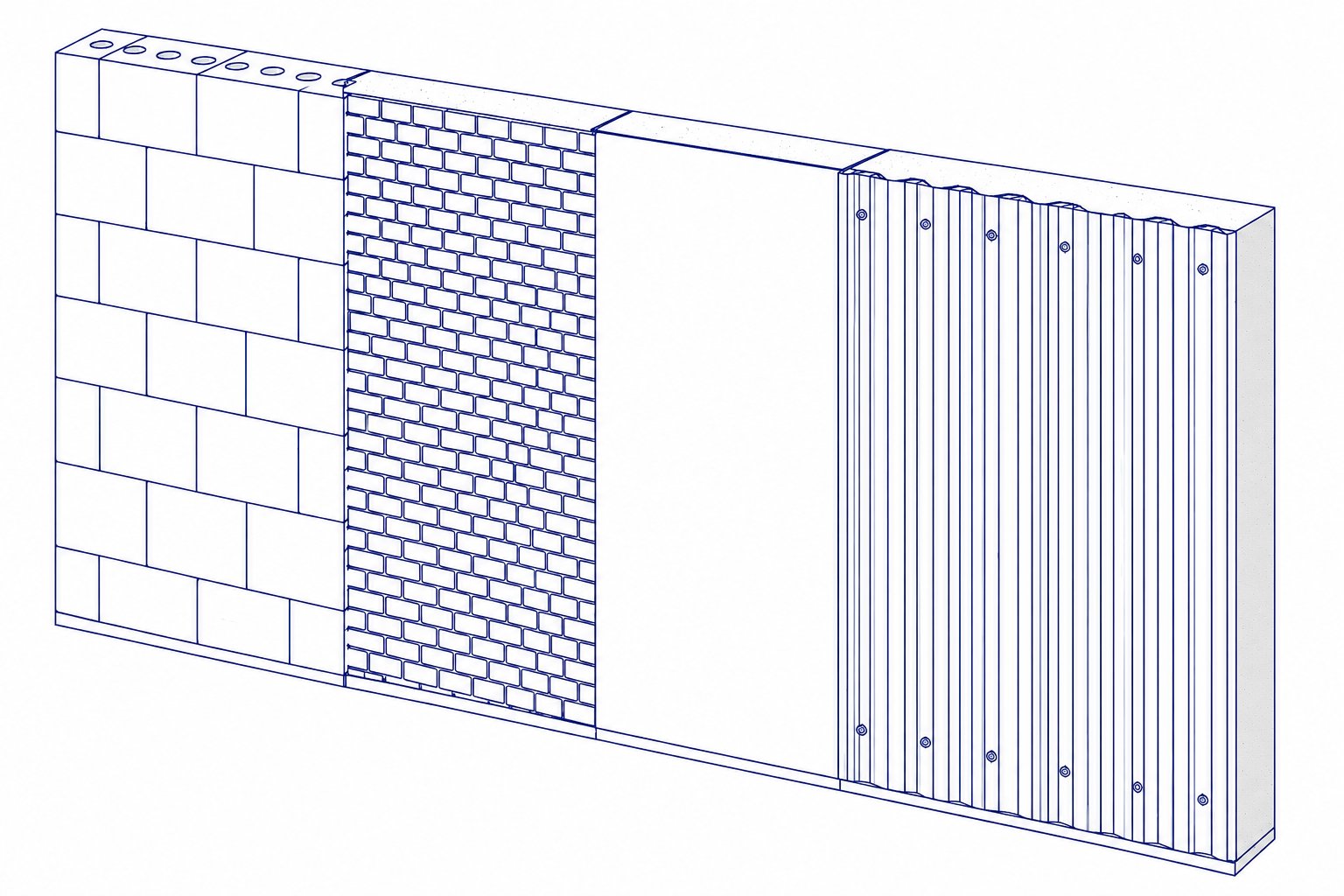
Material types:
Aerated concrete blocks — basic adhesion
Brick masonry — spray control & moderate absorption
Smooth plaster — ideal substrate for precision
Corrugated sheet — requires primer + extra layers
Why surface matters:
Surface type is essential for result and cost. Aerated concrete blocks offer basic adhesion, brick masonry has moderate absorption and good material grip, but its texture cannot be eliminated and will visually affect the work. Smooth plaster represents an ideal substrate for clean details and maximum control, while corrugated sheet requires additional preparation, special primers and multiple layers.
Irregular surfaces, such as fences or imperfect walls, do not allow for very precise details and significantly complicate the execution process.
It is important to understand that the wall type directly influences the working method: from the quantity and type of materials used, to the time needed for execution. Depending on the surface and the complexity of the requirement, the final result and the level of finesse may vary.


